
OUR ARTICLE HAS BEEN PUBLISHED IN METALSAN MAGAZINE
TRACKING PROCESSED METALS IS VERY EASY WITH HIGH-TEMPERATURE ROLLING LABELS
In the October 2021 issue of Metalsan Magazine, our General Coordinator, Canan Eser, provided information on “Labeling in Processed Metals.”
Why is labeling processed metals difficult?
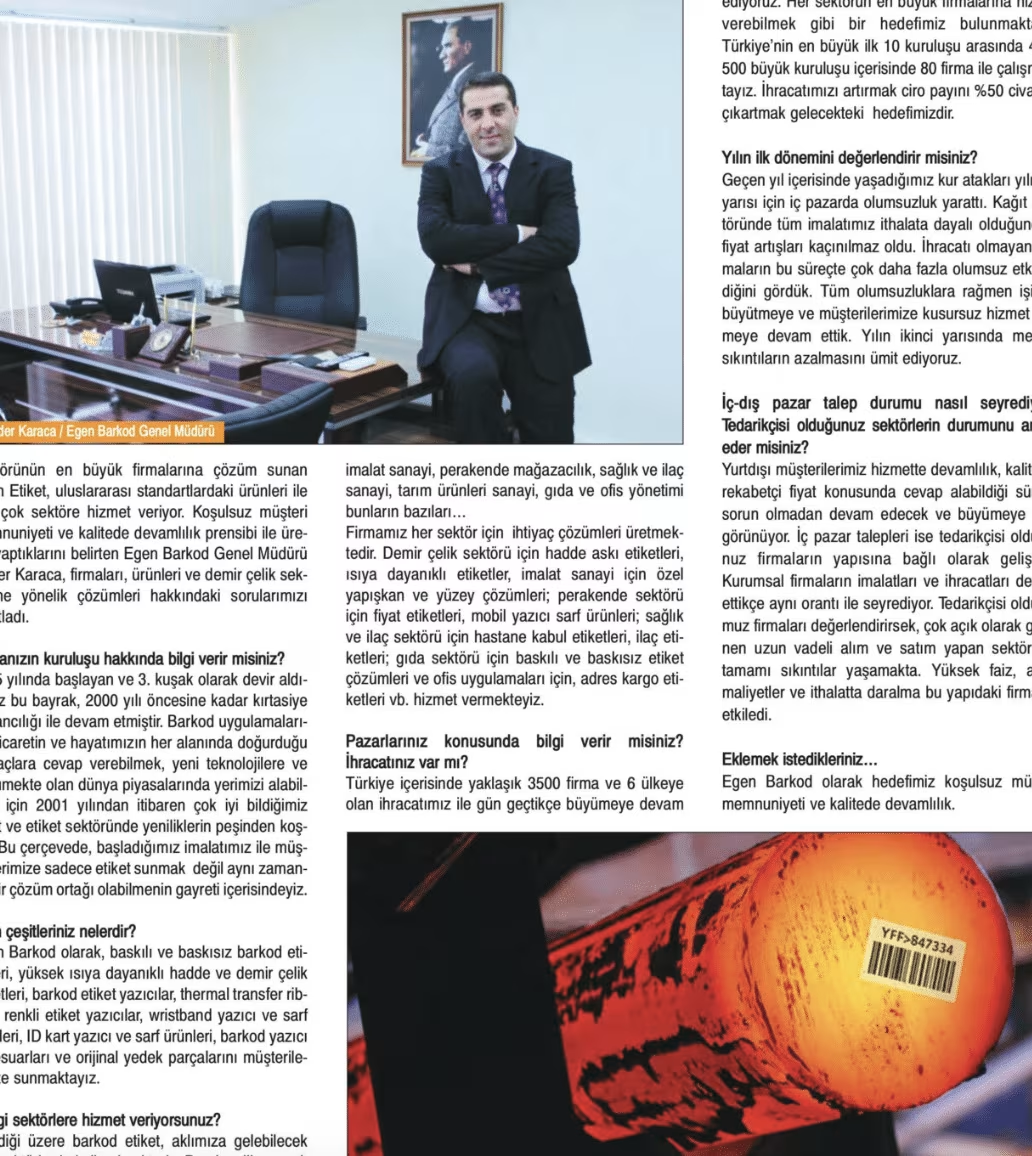
In order to identify and correctly track materials from the furnace stage through to delivery to customers, barcode labels are attached to sheets, flat and round bars, and coils that may be exposed to temperatures exceeding 600°C. Finding durable barcode labels that will withstand extreme temperatures and harsh production environments, remain attached to the material, and stay readable throughout the process represents a major challenge.
What is the solution?
The label raw material must be resistant to high temperatures. Likewise, the ribbon used for surface printing must be a heat-resistant resin ribbon. Labels produced in this way can be attached directly to coils, rolls, bars, sheets, rebar, pipes, or wire bundles as they exit the furnace.
In this way, you can track hot metals in mills and foundries and maintain accurate process control throughout the entire workflow.
Where are high-temperature rolling labels used?
These labels are used to identify hot metal sheets, billets, pipes, tubes, coils, and rolls; to track processes related to pickling, heat treatment and chemical coating; for post-furnace in-process tracking; and to monitor materials all the way from the furnace to the end customer.
What are the features and benefits of high-temperature rolling labels?
The primary benefit is that the labels deliver high accuracy and reliability.
Labels printed with heat-resistant resin ribbons on thermal transfer barcode printers provide high durability and abrasion resistance, ensuring the long-term preservation of critical barcode data. The surfaces are resistant to fading and discoloration. They do not deteriorate even when exposed to high temperatures and weather conditions for long periods. They are an excellent alternative to riveted plates, chalk, or paint markers for tracking hot metals in foundries. In order to prevent accidental removal during storage or delivery, they have high tear resistance.
These features enable long-term barcode readability, accurate metal identification, and traceability. They eliminate the health and safety risks associated with hot metals and make the transition to automated systems possible. They also help you avoid high scrap and recall costs arising from incorrectly labeled materials and unreadable barcodes, as well as labor costs associated with manual labeling.
What types of high-temperature rolling labels are available?
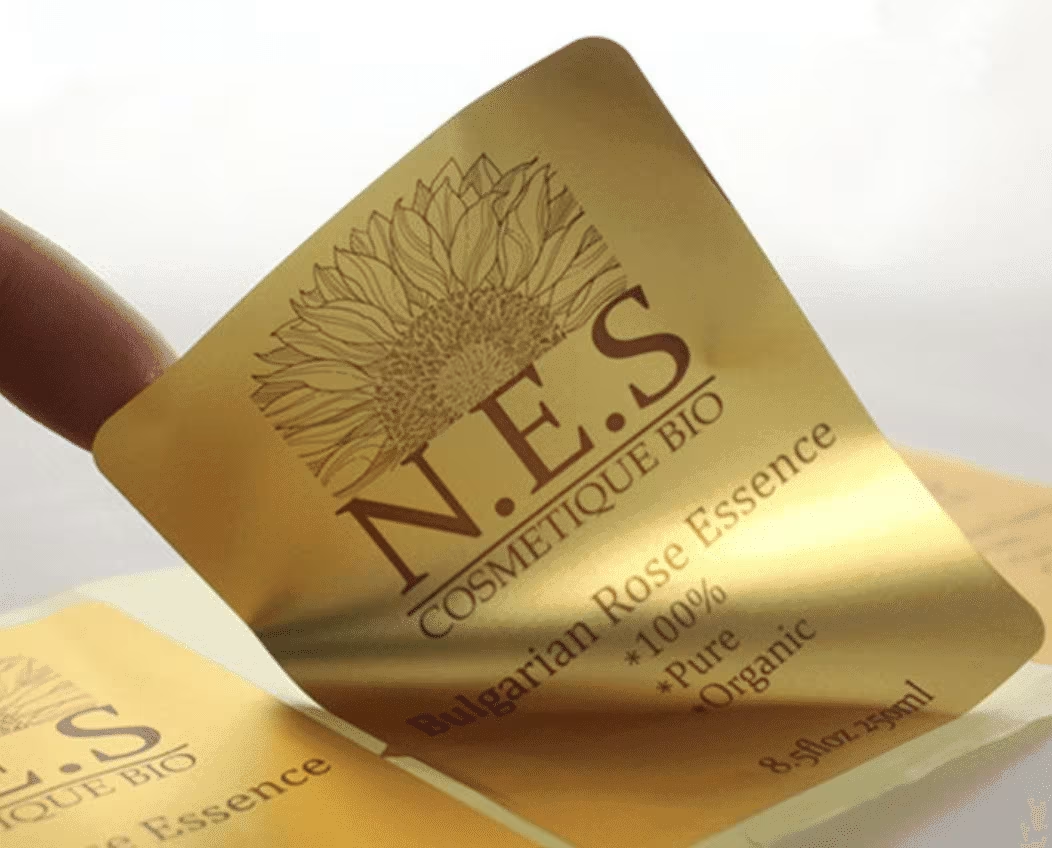
Depending on the application, these labels may be self-adhesive or non-adhesive tag (loop) labels. They are produced from various high-temperature-resistant raw materials such as polyester, polyamide, and aramid.
Can you tell us about Egen Barkod’s experience with high-temperature rolling labels?
We have been serving leading companies in the iron and steel industry for many years. As a result, we understand the expectations, questions, and challenges very well. Our R&D and production processes are shaped within this framework. Our business partners conduct tests in real production environments and share the results with us.
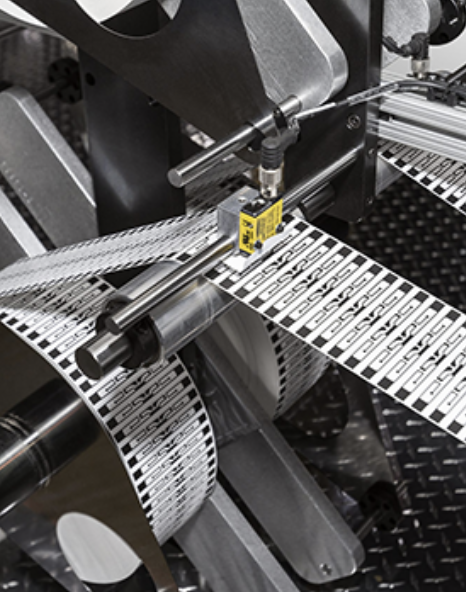
We offer labels produced with different surface options, both adhesive and non-adhesive. Another important expectation of iron and steel companies is to be able to carry out tracking through automated systems. For this purpose, RFID chips must be integrated into the labels. With our fully domestic RFID chip application machine, produced in Türkiye, we also manufacture labels with integrated RFID chips.